Find The Best Disk Chiropractor to Avoid Lumbar Lifting Injury Surgery
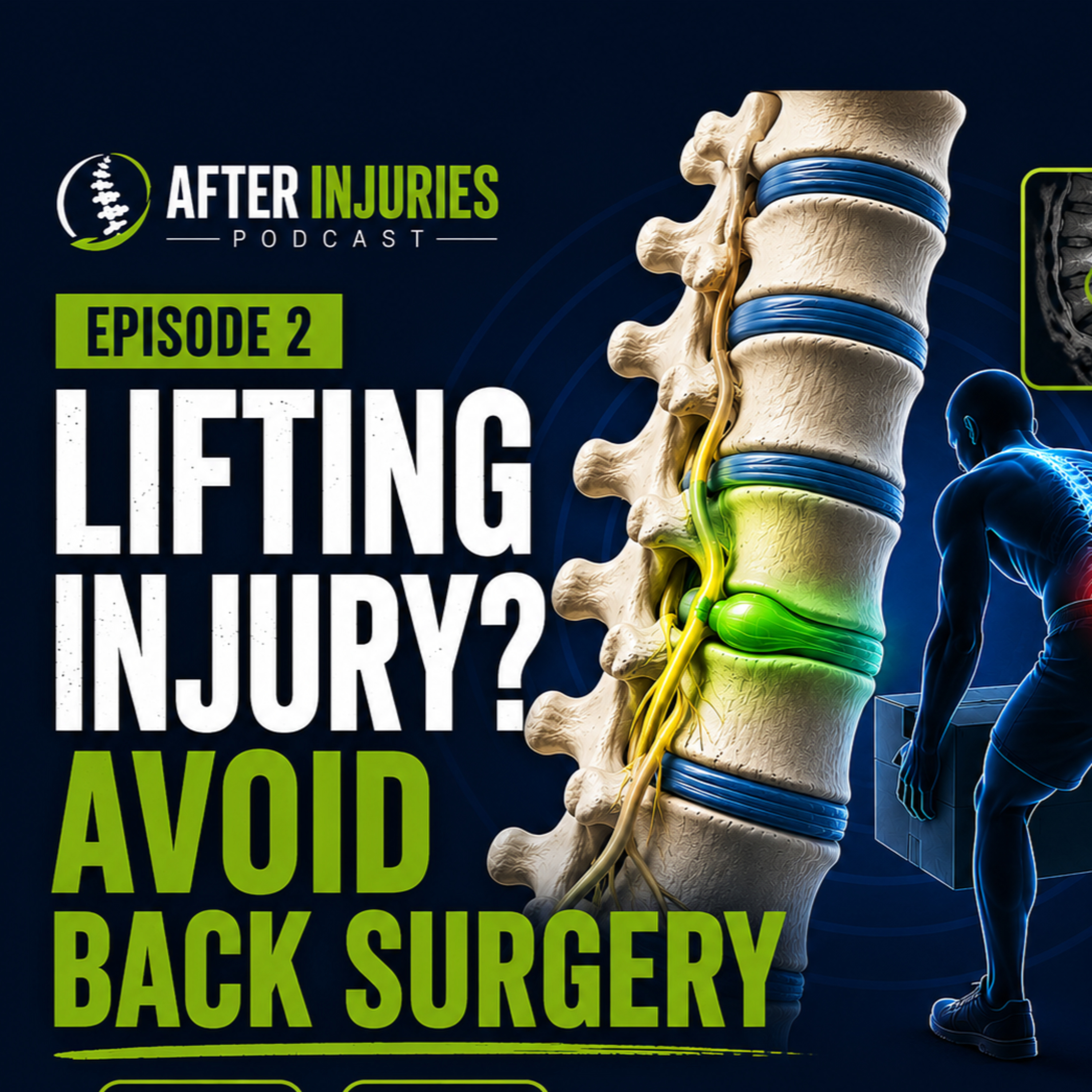
In this episode of After Injuries, we walk through how to find the right local chiropractor or disc‑focused clinic for a lifting‑related lumbar disc injury — not just the closest office or the one with the loudest ad.
You lifted something, felt that “oh no” moment in your lower back, and now you’ve got pain or tingling running down one leg and a search history full of “herniated disc” and “sciatica.”
You’ll learn:
-
What a lumbar herniated disc and sciatica actually are in plain English
-
Why “chiropractor near me” is usually the wrong move after a disc injury
-
Exact search phrases that surface disc‑focused chiropractors and disc centers in your area
-
How to scan websites, profiles, and reviews like an injured patient who knows what to look for
-
A simple checklist to qualify whether a chiropractor really works with disc and sciatica cases
-
Four smart questions to ask on the phone before you book your first visit
-
What a realistic non‑surgical recovery path can look like when your goal is to avoid surgery and get your life back
Nothing in this episode is meant to diagnose you or replace an in‑person exam.
Dive deeper, get future episodes, and find resources at
AfterInjuries.com.
This episode is produced in association with Visible.info -where chiropractors can audit the authority of their locations in a single visit and see how they truly show up when injured patients are searching.
00:00 — How to Find the Right Chiropractor for a Herniated Disc Without Rushing Into Surgery
How to find the right chiropractor for a herniated disc without rushing into surgery.
00:10 — Introduction: That One Lift That Changed Everything
Welcome back to the After Injuries Podcast. If you're listening to this, there's a really good chance one moment changed how your back feels every single day.
Maybe it was a box at work, a suitcase, a kid, a barbell, or just something you twisted to grab off the floor.
You felt a grab, maybe a pop, and since then your lower back hasn't felt right. Now you've got pain, maybe tingling or burning running down one leg. Sitting is miserable, and somewhere in the back of your mind is that one word, surgery.
Nothing in this episode is meant to diagnose you or replace an in-person exam.
I'm Tom the producer. We're here to help injured people cut through AI, search, and social noise to match with the right local chiropractor for their specific injury.
We do that because we work with chiropractors directly, and I've worked with personal injury law firms for decades on how they show up when you're hurt and looking for help.
Today we're talking directly to you if you hurt your lower back lifting or bending. You've got pain, numbness or tingling running down one leg. You're seeing words like herniated disc and bulging disc, and you're searching sciatica.
And you want to avoid surgery and injections if you can, but you also want your life and work back.
Over the next 10 minutes, I'm going to walk you through what's actually going on with a disc injury in plain English, how to search for the right local chiropractor or disc focused clinic, how to qualify them, and what to ask for before you ever book that first visit.
02:00 — Part One: What a Herniated Disc Really Is Without the Scare Tactics
Let's start by making sense of what's happening in your back.
Between each bone in your spine, you've got a disc. Think of this disc like a small cushion, tougher on the outside, softer on the inside, designed to absorb shock and let you move without bone grinding on bone.
When people say herniated disc, bulging disc, or disc protrusion, they're describing different degrees of the same basic problem.
Some of that inner material has pushed outward far enough to bother a nearby nerve.
That's why your problem isn't just a sore back.
With a lumbar disc issue, the pain often has a pattern. It might start in your low back, travel to your buttock, then run down the back or side of your leg, sometimes into the calf or even the foot.
That radiating pattern is what most people mean when they say sciatica.
Here's the part that often gets lost in that fear.
A lot of herniated discs do not automatically equal you must have surgery.
Many disc injuries can calm down over time with the right kind of conservative care. Things like specific chiropractic work, decompression, physical therapy, smarter movement, and changes in how you use your body.
Surgery absolutely has a place, especially if you have certain red flag symptoms, but it's usually not the first step in the journey.
So your real question isn't just do I have a disc problem? It's who should help guide the first phase of dealing with this disc problem before I jump into procedures I can't undo.
04:15 — Section Two: Why "Chiropractor Near Me" Isn't Good Enough for Disc Pain
When your back is on fire and your leg is buzzing, you don't feel like being a researcher.
Most people grab their phone and type chiropractor near me. Best chiropractor in Fort Myers, best chiropractor in New York City, best chiropractor in LA or your neighborhood. And then they click whatever is closest or has the most stars.
For simple stiffness or everyday aches, that might not get you into too much trouble.
But a true disc problem with leg pain is not a quick in and out situation.
You don't want a random provider.
You want someone who actually works with disc and sciatica cases on a regular basis.
A good disc chiropractor or disc focused clinic is going to do a few things differently.
- Take a real history of how the injury started
- Test movement, strength, and nerve function
- Review imaging when appropriate
- Create a phased recovery plan
Not every chiropractor practices that way.
Some focus on wellness tune-ups. Some on general neck and back pain. Some on athletes. That's all fine.
But if you've got true low back pain plus leg pain after a lifting injury, you want someone who thinks in terms of discs, nerves, and a phased plan, not just "you're right, you're tight, let's crack this."
06:30 — Section Three: Smart Searches That Actually Surface Disc-Focused Chiropractors
Let's upgrade the way you talk to Google.
Right now, if you suspect a lumbar herniated disc and sciatica from lifting, your search needs three ingredients:
- What you think is going on
- How it started
- Where you are
Instead of chiropractor near me, try things like:
- Herniated disc chiropractor low back and leg pain + your city
- Sciatica chiropractor from lifting injury + your city
- Non surgical spinal decompression herniated disc + your city
- Disc center low back and leg pain + your city
The exact words don't have to be perfect.
What matters is you include:
- Herniated disc, disc, or sciatica
- Lifting injury or work injury
- Your city or neighborhood
When you do that, two useful things happen.
First, you start seeing chiropractors and clinics that actually use this language on their website and profiles.
Second, you filter out a lot of generic results that may be fine for simple back tightness but are not clearly built around disc patients trying to avoid surgery.
Look for phrases like:
- Disc Center
- Herniated Disc Treatment
- Non Surgical Spinal Decompression
- Sciatica and Leg Pain
- Before You Choose Surgery
09:15 — Section Four: How to Qualify a Disc-Focused Chiropractor
Once you have a short list of two or three options that look promising, it's time to qualify them.
You don't need medical training to do this. You just need to slow down and look for a few specific signals.
First: Do they clearly treat disc and sciatica cases?
Look for words like:
- Herniated disc
- Bulging disc
- Disc protrusion
- Degenerative disc
- Sciatica
- Leg pain
Second: Do they explain their evaluation process?
You want to see mention of:
- Detailed history
- Orthopedic testing
- Neurological testing
- X-ray or MRI review
Third: Do they discuss decompression or a structured disc plan?
Disc focused clinics often discuss traction, decompression tables, and phased treatment plans.
Fourth: Do their patient stories sound like you?
Look for reviews mentioning:
- Herniated disc
- Sciatica
- Leg pain
- MRI findings
- Avoiding surgery
- Returning to work
- Returning to the gym
Finally: Are they honest about limits?
Look for providers who know when to refer for injections, surgical consults, or additional specialists.
Look for confidence, not denial.
12:45 — Section Five: What to Ask Before You Schedule
Before you hand over your time, money, and hope, pick up the phone and ask a few direct questions.
Question One: Do you regularly treat patients with lumbar disc herniations and sciatica from lifting injuries?
Question Two: What does your evaluation look like for someone with my symptoms?
Question Three: Do you offer non-surgical options like spinal decompression or a structured disc program?
Question Four: When do you decide it's time to refer someone out for injections or a surgical opinion?
You want someone who is on your side, not someone whose ego depends on being the only person you see.
If you can get clear, grounded answers to those four questions, you'll have a much better sense of whether this chiropractor should be your guide for the next phase of your disc journey.
15:30 — Section Six: A Realistic Path Back From a Lifting-Related Disc Injury
Let's zoom out and talk about what a realistic path can look like if you're trying to avoid surgery and get your life back.
In a lot of cases, the journey has three overlapping phases.
Phase One: Calm the Fire
The first goal is to reduce the intense back and leg pain enough that you can function.
This might involve targeted adjustments, decompression, gentle movement, medication guided by a medical provider, and avoiding activities that aggravate the nerve.
Phase Two: Restore Movement and Strength
Once the worst pain settles, you gradually earn back better movement.
This can include:
- Learning safer movement patterns
- Improving sitting and lifting mechanics
- Building core strength
- Building hip strength
- Beginning targeted exercises
Phase Three: Return to Real Life and Work
This is where you and your provider look at your actual daily activities and create a plan to return safely.
That might mean changing how you lift at work, train at the gym, or sit during the day.
Most disc cases that improve with conservative care show meaningful change somewhere in that first four to twelve week window.
Your job is not to become a spine expert overnight.
Your job is to pick a good guide, ask smart questions, and stay engaged long enough for your body to respond.
19:15 — Frequently Asked Questions About Herniated Discs and Chiropractors
Question One: Should I always try conservative care before thinking about surgery for a herniated disc?
Not always, but in many situations, yes.
If you don't have severe red flag symptoms like serious leg weakness or loss of bowel or bladder control, a lot of people start with a structured period of non-surgical care.
Question Two: How do I know if my sciatica is serious enough that I shouldn't wait?
If you notice new or worsening leg weakness, trouble controlling your bladder or bowels, or rapidly worsening pain, seek urgent medical evaluation.
Question Three: What should I look for in a chiropractor if my MRI already shows a herniated disc?
Look for someone who discusses disc and nerve problems, explains their evaluation process, and is comfortable reviewing imaging.
Question Four: How long should I give non-surgical care before I think about injections or surgery?
This depends on your case, but many providers recommend a focused period of several weeks to a few months of consistent conservative care.
Question Five: Can I ever get back to lifting or the work I was doing before?
Many people with disc injuries do return to lifting and physically demanding work. The process is gradual and involves improving how you move, lift, and recover.
22:00 — Closing: Your Next Step
If this episode sounded uncomfortably familiar — the lift, the low back pain, the leg symptoms, the fear of surgery — your next step is simple.
Use one of the more specific search phrases we talked about.
Find a handful of disc-focused chiropractors or disc centers near you.
Run them through the checklist.
And call one or two to ask the questions from this episode.
You don't have to fix everything today.
You just have to stop guessing alone and start working with the right person for this specific injury.
That's it for this episode of After Injuries.
See the link below the episode if you'd like a copy of our patient guide for this episode.
If you know someone who did that one lift and hasn't been the same since, send this to them so they can stop doom scrolling and start taking a smarter next step.
Don't forget to like and subscribe anywhere you listen to this podcast and on the After Injuries YouTube channel.